
Hunger often ranks among the primary reasons people quit a diet. Other top contenders for throwing in the towel include deprivation, sustainability, rigidity, impatience and a phenomenon known as the “what the hell” effect.
The 25-year-old Volumetrics diet likely won’t help impatient people who seek significant weight loss quickly. But it does mitigate the other situations that frustrate people striving to manage their weight. In medical studies evaluating the eating method and surveys, individuals following the plan report higher levels of satiety, a state of feeling satisfied or full.
Volumetrics’ foundation is based on low-calorie, high-water, high-protein and high-fiber foods. That combination allows people to consume more, feel full and lose weight. It’s highly rated by U.S. News and World Report as one of the best diets for weight loss in 2025.
In 2022, that magazine ranked it as No.1 for weight loss diets, and in 2023, Volumetrics was among the top 10 in almost a dozen categories, including: best heart-healthy diets, best for bone and joint health, best plant-based diets, easiest to follow, best for diabetes and best family-friendly diets.
Barbara J. Rolls, a professor at Penn State and a leader in nutritional science, developed Volumetrics in 2000. The diet does not bar the consumption of any food group. Its inclusion of a wide variety of foods makes it less rigid than other nutrition plans.
By allowing all foods, Volumetrics bears some similarity to the DASH diet, which stands for Dietary Approaches to Stop Hypertension, and MyPlate, the U.S. Department of Agriculture’s meal guidelines. However, it does not establish specific consumption goals, as the former does, or limit calories, as the latter requires.
Instead, Volumetrics places all foods in four categories. Category one includes non-starchy, nutrient-rich, low-calorie, high-water-content fruits and vegetables, such as kale, beets, broccoli, grapefruit, and apples. Foods in category one have the lowest calorie count per gram, allowing people to eat more of them and feel full.
The second category includes potatoes, corn, beans, lentils, and lean cuts of poultry, beef and pork. Volumetrics meal planning means the majority of foods consumed come from categories one and two, as the fiber, protein, and water content will allow you to feel fuller for a longer period.
There is no measuring or calorie counting. Broth-based soups that include food from categories one and two are also Volumetrics’ mainstays.
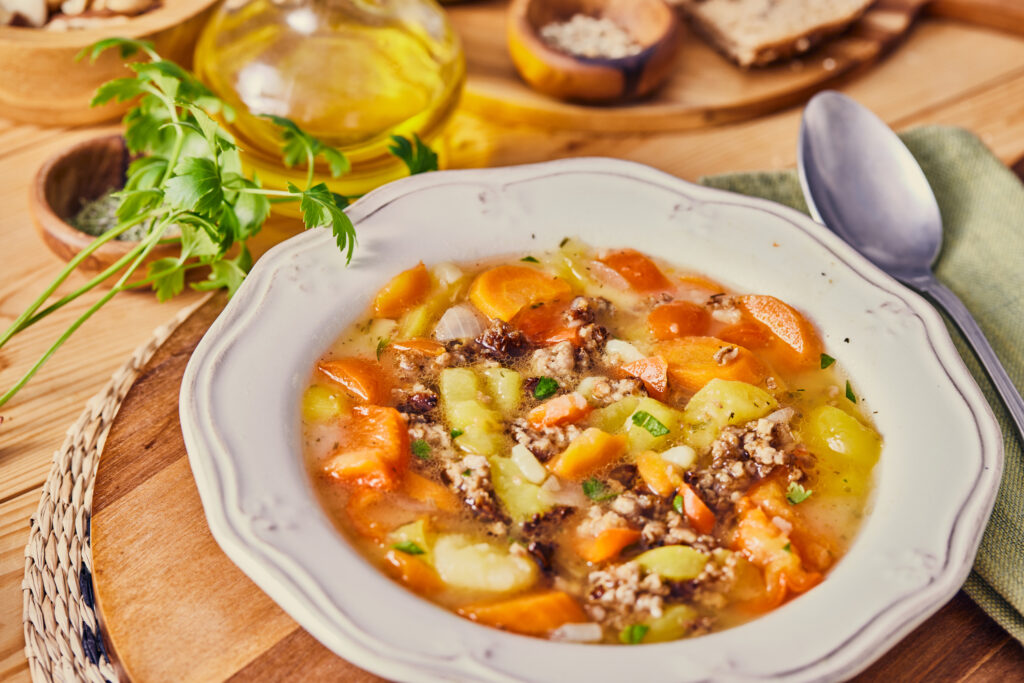
White rice, whole milk, refined white pastas, fatty fish, and meats and poultry with skin are category three foods. People following Volumetrics don’t have to avoid those foods; they just need to eat smaller portions of them. When it comes to the fourth category, Rolls’ plan advises eating them rarely and in small portions. That grouping includes nuts, oil, fast food, lard, butter, candy and chips. Those foods have the highest calorie count per gram.
With Volumetrics, foods are not considered “good” or “bad,” which may help avoid the diet-derailing “what the hell effect.” That’s how psychologists refer to what happens when a person living with restrictions eats something deemed “bad” and opts to throw the baby out with the bathwater and binge.
An Ohio State University sports psychologist who specializes in eating disorders has said that giving up on a diet rarely has anything to do with willpower or self-control.
“Our bodies are wired for survival, and they interpret less energy availability (through dieting) as a threat to survival,” Jen Carter wrote in a publication from The Ohio State University. “Therefore, our bodies react to calorie deprivation with countermeasures that include metabolic, hormonal and neurological changes that overwhelm willpower.”
“Calorie restriction can lead to slower metabolism, increased hunger hormone (ghrelin) and decreased satiety — or ‘feeling full’ — hormone (leptin),” Carter continued. You not only feel hungrier, but you’re less likely to feel full or satisfied by what you eat. It tends to increase the mind’s preoccupation with food and increases activity in the brain’s reward center when we consume high-calorie foods.”
While Volumetrics regularly receives high marks for satiety, the diet limits healthy monounsaturated fats and omega-3 fatty acids. And healthy fats found in salmon, walnuts and avocados are essential for critical bodily functions and cardiovascular health.
Additionally, vitamins A, D, E and K are fat-soluble, which means you need to consume fat for your body to benefit from those vitamins. Keep in mind, healthy fats are not prohibited in Volumetrics, just limited. As always, consult your physician before making any changes to your diet and ask about the recommended amount of healthy fat required to ensure proper absorption of the aforementioned fat-soluble vitamins.
In addition to satisfying Volumetrics dieters with a feeling of fullness, two studies suggest that increasing fruit and vegetable intake, as Volumetrics requires, produces appreciable weight loss.
A 2007 study did not specifically evaluate Volumetrics, but it did assess the addition of water-rich foods to the participants’ eating regimen. One group of obese women only reduced their fat intake.
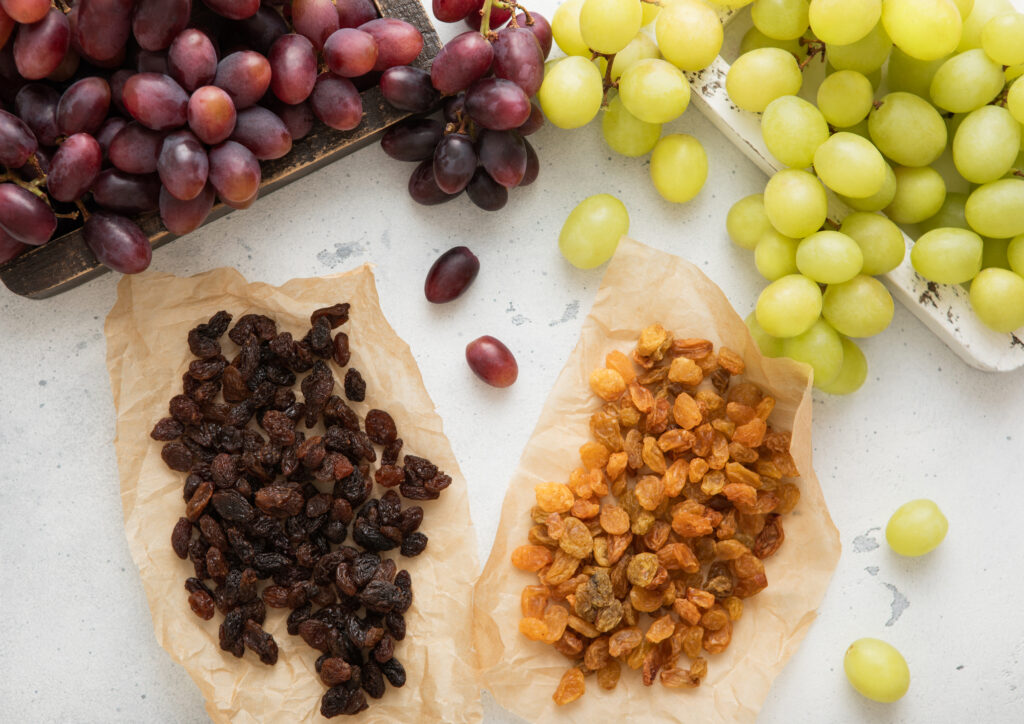
A second group of obese women reduced fat intake and ate more water-rich foods, particularly vegetables and fruits. The group that added more fruits and vegetables to their diet lost 33% more weight than the group that did not.
More recently, a June 2025 study compared the Volumetrics diet to time-restricted eating, a form of intermittent fasting. In the study, the time-restricted eating group was permitted to consume food only during an eight-hour period. The 16-hour fasting, 8-hour eating, or 16:8 restriction is a common and well-known form of time-restricted eating.
The study found that both dietary plans resulted in reduced body weight, fat mass, body mass index and waist circumference. The researchers noted that the sample size of the groups was too small to make definitive conclusions, but they suggested that the Volumetrics diet and time-restricted eating “are potential dietary approaches to counteract age-related changes in body composition and can be used as long-term measures with good adherence.”
It’s important to note that the American Heart Association in 2024 published research that indicates the 16:8 time-restricted eating has been linked to a 91% higher risk of cardiovascular death. And “among people with existing cardiovascular disease, an eating duration of no less than eight but less than 10 hours per day was also associated with a 66% higher risk of death from heart disease or stroke,” the report stated.
Although the Volumetrics diet generally produces a feeling of satisfaction and fullness, it curtails calorie consumption by emphasizing the consumption of nutrient-rich, low-calorie foods. Researchers have found evidence that suggests cutting calories reduces the occurrence of disease and improves longevity.